

Ode to the Impossible Task
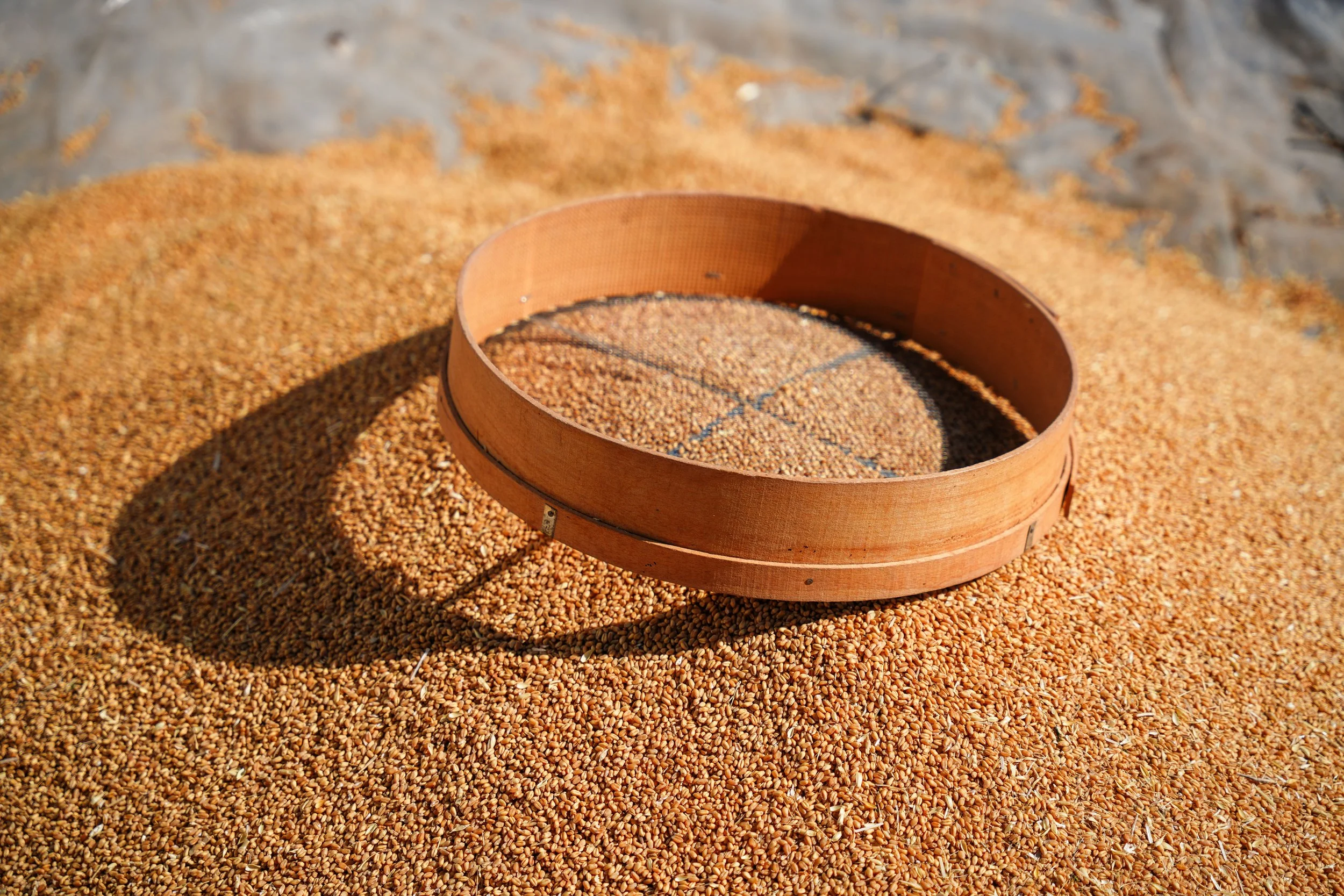
Some of us have forgotten the value of the impossible task.
Have you ever heard the story of Vasalisa the Wise, the young girl who, when the fire goes out in the hearth, is sent out into the cold dark woods by her (as it often happens in the stories) uncaring and unyielding stepmother to fetch fire from the home of the mysterious witch Baba Yaga? It's a story of self-discovery.
Bringing Back the Light
As Vasalisa travels through the woods she is tested through several encounters, first by Baba Yaga's riders, and finally by the old witch herself. The riders pass her one by one as she walks. A white rider on a white horse gallops by and the day begins to dawn. A red rider on a red horse thunders past and the sun rises. By the time she finally reaches the witch's hut, standing on its enormous chicken legs inside a fence made of bones and topped with glowing skulls, a black rider on a black horse has swept by and night has fallen. Later she learns that these riders are Baba Yaga's servants: her bright day, her red sun, and her dark night.
All that Vasalisa has to guide her is a doll given to her by her mother on her deathbed. In the story the doll represents her mother's wisdom handed down to Vasalisa. Each time Vasalisa comes to a fork in the path, she feeds the doll a little bit of bread and asks which way to go, and the doll answers. When she gets to the old witch's house the witch assigns tasks that seem impossible. She must wash the witch's clothes, sweep the yard, clean the house, and cook the supper. And then, as if that weren't enough, she must sort a great heap of mildewed corn from the good corn, kernel by kernel, and the next night, separate a mountain of poppy seeds from the dirt they've been mixed with. But through the power of her mother's wisdom she is able to get them done.
Jungian analyst Clarissa Pinkola Estés, whose telling in Women Who Run With the Wolves is where many of us first met Vasalisa, reads the sorting tasks as lessons in discernment: the slow, careful work of learning to separate this from that, the nourishing from the spoiled, what we'll keep from what we'll let go. It is not glamorous work. It is patient, repetitive, close-to-the-ground work. And it turns out it is exactly the work that makes Vasalisa wise.
A Dryer Full of Foam
I was thinking of this the other day when, as I opened the dryer, I realized that I forgot to take the stuffing out of my dog's bed before I washed it... and the entire dryer was filled with thousands of teeny tiny pieces of shredded foam, some of which were clinging to all of the dog's blankets which had also been in the dryer. As I got down on my hands and knees to do the careful work of picking the foam pieces off of each of the blankets, I recalled that particular challenge of Vasalisa's where she had to sort the mildewed corn from the good, one kernel at a time. My body fell into the monotonous rhythm of sorting and my mind began to roam freely and creatively, chewing on various problems I am working on solving, giving me new ideas about my business, and ultimately coming up with the seed of this blog post.
There's a detail in the old Russian telling of the story that I love. Each night, when Vasalisa is overwhelmed by the impossible task in front of her, the doll tells her not to be afraid, to say her prayers and go to sleep, because "the morning is wiser than the evening." Our grandmothers' grandmothers knew something that researchers are only now putting numbers to. In a 2012 study published in Psychological Science, Benjamin Baird, Jonathan Schooler, and their colleagues at UC Santa Barbara gave people a creative problem to solve, then a break. The people who spent that break on a simple, undemanding task, the kind that lets the mind wander, came back and performed substantially better on the problems they'd already seen than people who spent the break on a demanding task, resting, or taking no break at all. And here's the part that fascinates me: they weren't consciously thinking about the problem any more than anyone else. Their minds were simply wandering, and the wandering did the work. The researchers' conclusion was that simple external tasks that allow the mind to wander may facilitate creative problem solving. In other words, the foam, the corn, and the poppy seeds were never the point. They were the doorway.
The Speed of the Body
Slowing down and moving at the speed of the body, at the speed of breath, at the speed of time is an incredible gift we can give ourselves. I think it is what runners, and crocheters, and gardeners, and yogis alike have discovered, which is that an engaged, present, and grounded body creates the foundation for a peaceful and expansive mind.
The science backs up the runners and the crocheters. When Stanford researchers Marily Oppezzo and Daniel Schwartz tested people's creative thinking while sitting versus walking, creative output increased by an average of 60 percent when people walked, and it didn't even matter whether they were strolling outdoors or walking on a treadmill facing a blank wall. It was the rhythm of the body that mattered, not the scenery. And in an international survey of more than 3,500 knitters published in the British Journal of Occupational Therapy, the people who knitted most often were significantly more likely to report feeling calm and happier after they put down their needles. Whatever the form, repetition that engages the body seems to free the mind.
I Can Get You There Faster
From time to time a potential coach or collaborator lands in my LinkedIn inbox or on one of my networking calls interesting enough to warrant a conversation. And inevitably at the end of that conversation they will all say the same thing: "I am confident you will get there, but I could get you there faster."
I've come to learn I don't value fast. It's like I'm Vasalisa, and let's say my business is on a little hill. And the next success or milestone I am after is on another little hill far in the distance. The only path between here and there lies through the dark forest in the valley below. Now, I'm just starting out on my journey, untested, unchallenged, unproven, and if a fairy godmother from the sky comes and offers to pick me up from my hill and drop me over on the next, that could sound very appealing. The forest is scary. I don't know what I might encounter. I am unsure if I have the skills to manage it. And yet, isn't that the point?
In building a business, many of us are in the position of being tested, learning which of our skills and talents to apply to which problems, learning new skills, challenging our resourceful problem-solving minds to grow, pushing our edges. Without this friction, and the opportunity to persevere, how confident would we be in our own capabilities, and how grounded in our own disciplines, those we purport to offer others?
Why the Journey Matters
Psychologist Albert Bandura, whose research on self-efficacy has shaped decades of thinking about how people come to believe in their own capabilities, found that the most effective way of building a strong sense of efficacy is through mastery experiences, the direct experience of doing hard things ourselves. But he was clear that not just any success will do. "A resilient sense of efficacy," he wrote, "requires experience in overcoming obstacles through perseverant effort." And then the line that stopped me in my tracks: "If people experience only easy successes they come to expect quick results and are easily discouraged by failure." The fairy godmother, it turns out, can drop us on the far hill with a shakier foundation than the one we started with.
UCLA learning scientists Robert and Elizabeth Bjork have spent decades studying what they call "desirable difficulties," the kinds of challenges that make learning feel slower and harder in the moment but make it stick. Their most important finding may be the simplest one: "current performance is not a reliable index of learning." How fast we seem to be moving tells us very little about how much we're actually growing.
This matters more now than it ever has, because the fairy godmother has never been more available. Every tool, platform, and inbox now offers to get us there faster. In a 2025 study published in PNAS, researchers at the University of Pennsylvania's Wharton School gave nearly 1,000 high school math students in Turkey access to GPT-4 during practice sessions. With an unrestricted chatbot, students' practice scores jumped by 48 percent. But when the tool was taken away for the exam, those same students scored 17 percent worse than students who had never had access at all. They had been carried over the forest, and when it came time to walk it on their own, they didn't know the way. (Notably, students who used a version of the tool designed to give hints rather than answers didn't see that drop.) A 2025 survey of 319 knowledge workers by Microsoft Research and Carnegie Mellon found something similar in the workplace: the more confidence people placed in generative AI, the less critical thinking they reported doing, while people with more confidence in themselves did more.
For those of us who lead teams, this phenomenon is worth considering. When we hand our people the answer instead of the path, when we reward speed over sorting, when we automate the corn and the poppy seeds before anyone has learned what spoiled corn looks like, we may be building organizations that perform beautifully right up until the moment the conditions change. The forest is where judgment is made.
Whose Voice Is It?
I want to be clear, though, that I really do believe in coaching. I've built a practice on it, and I've been on the receiving end of it at some of the most important turning points in my life. Vasalisa had to rely on help. She needed the wisdom of the doll. She didn't walk into that forest with nothing, and none of us do.
But notice that Vasalisa's mother never offers to walk the forest for her. She doesn't carry her daughter over it, and she doesn't do the sorting while Vasalisa watches. What she gives her is a small thing she can carry, something she has to feed, and something she has to consult, over and over, at every fork in the path. The wisdom travels with her, but the walking is hers.
We all have the voice of our own internal wisdom, and sometimes that's a parent, a teacher, or some other guide or mentor before that voice can become our own.
The Russian psychologist Lev Vygotsky saw this nearly a century ago. He observed that the voice we think with doesn't start out inside us. It begins as conversation with the people who raise and teach us, becomes the out-loud self-talk you can hear any preschooler narrating at play, and eventually turns inward to become the quiet inner speech we use to guide ourselves. In other words, the voice in your head was once someone else's voice, spoken (hopefully) kindly enough and often enough that it became yours. Educational psychologists later gave the helping part of this process a name borrowed from construction: scaffolding. Good scaffolding is support that meets you just beyond what you can do on your own, and then is gradually taken away as you grow strong enough to stand without it. That is exactly what the doll is. It is a mother's voice, carried until it becomes a child's.
My general rule of thumb is that as long as I am hearing my own voice in my head as that voice of wisdom, coming from the deep context of my own personal experience, then I want to continue to forage through the woods on my own in search of what I need. And when that voice becomes too quiet, too scared, too anxious, too unkind... that is when I need someone else's voice to step in and guide me.
University of Michigan psychologist Ethan Kross, author of Chatter, has spent years studying what happens when that inner voice turns on us. He calls it chatter, the spiral of negative thoughts that keeps us stuck, rehashing the past and fretting about the future. His research found that one of the most effective ways out is to coach yourself the way you'd coach a friend, even speaking to yourself by your own name ("Rebecca, how are you going to handle this?") to create just enough distance to hear wisdom again instead of fear. And he's equally clear that sometimes the answer is another person. He encourages all of us to build our own trusted "board of advisers" for exactly those moments when our own voice can't find its way.
There's a study I love that makes this almost literal. Researchers Simone Schnall, Dennis Proffitt, and their colleagues stood people at the bottom of a hill and asked them to estimate how steep it was. People who were standing with a friend judged the hill to be less steep than people standing alone. Even people who simply pictured a supportive friend saw a gentler slope, and the closer and warmer the relationship, the smaller the hill looked. The forest didn't change, and neither did the hill. What changed was whose company they were in.
And the right guide, at the right moment, really does help. A 2014 meta-analysis in the Journal of Positive Psychology pooled the research on coaching in organizations and found significant positive effects on every outcome the researchers measured, including performance, wellbeing, coping, and work attitudes. The largest effect of all was on what they called goal-directed self-regulation, which is a researcher's way of saying that good coaching strengthens a person's ability to steer themselves. The best coaching doesn't make you need it more. It makes your own voice stronger.
That's the difference I've come to care about, both in the coaches I choose and in the coach I try to be. A fairy godmother promises to get you there faster. A doll in your pocket promises you won't be alone in the dark. One of them leaves you on the far hill wondering how you got there. The other lets you arrive knowing exactly who you are, because you've met yourself in the forest.
This is how I think about my work with the leaders, founders, and people in transition who come to me. I'm not here to carry you over the forest. I'm here for the stretches of the path where your own voice has gone quiet, or scared, or unkind, to lend you mine for a while and help you find your way back to your own. If you're standing at the edge of the woods right now and the voice in your head isn't sounding much like wisdom, I'd love to talk.
So the next time the dryer is full of foam, or the corn is mildewed, or the business problem in front of you looks like a mountain of poppy seeds, I hope you'll get down on your hands and knees and begin. The morning is wiser than the evening, every journey has something to teach you, and a task is only impossible until it has been done the first time.
And as you continue on your path, I'll leave you with the two questions I keep asking myself. Whose wise voice are you hearing inside? And how are you getting quiet enough to hear it?
